England · West Yorkshire
Yorkshire weddings refuse to stay in one city. The mehndi is at an aunt’s house in Bradford, the nikkah or the Anand Karaj is in Leeds, and the reception is wherever the hall was free. Booked function by function that means three different artists and a bride who looks like three different people in one album. Booked as one wedding, it does not.
Personally led by TejaswiniShe flies to England and stays for the whole weekend, across both cities, with one kit.
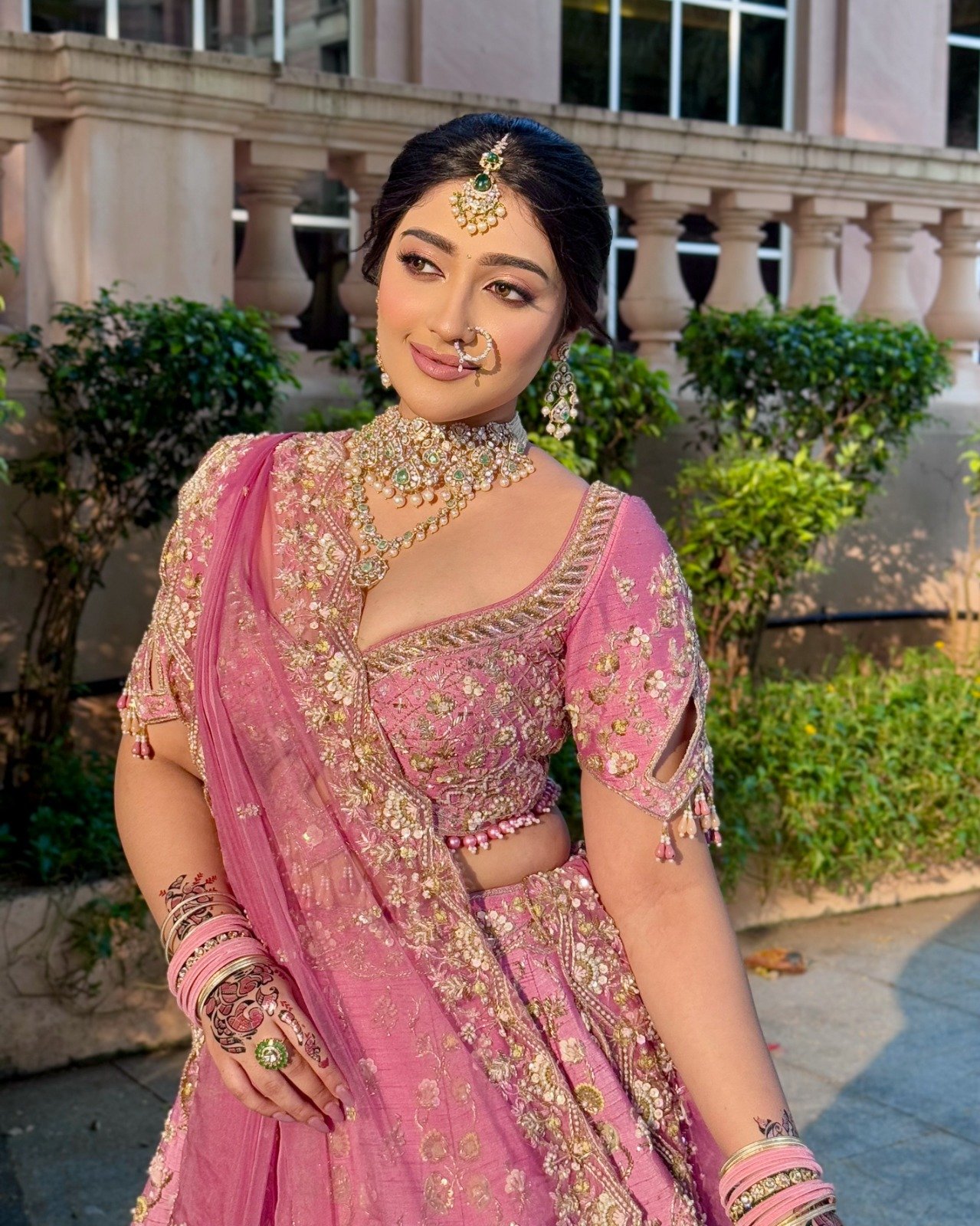
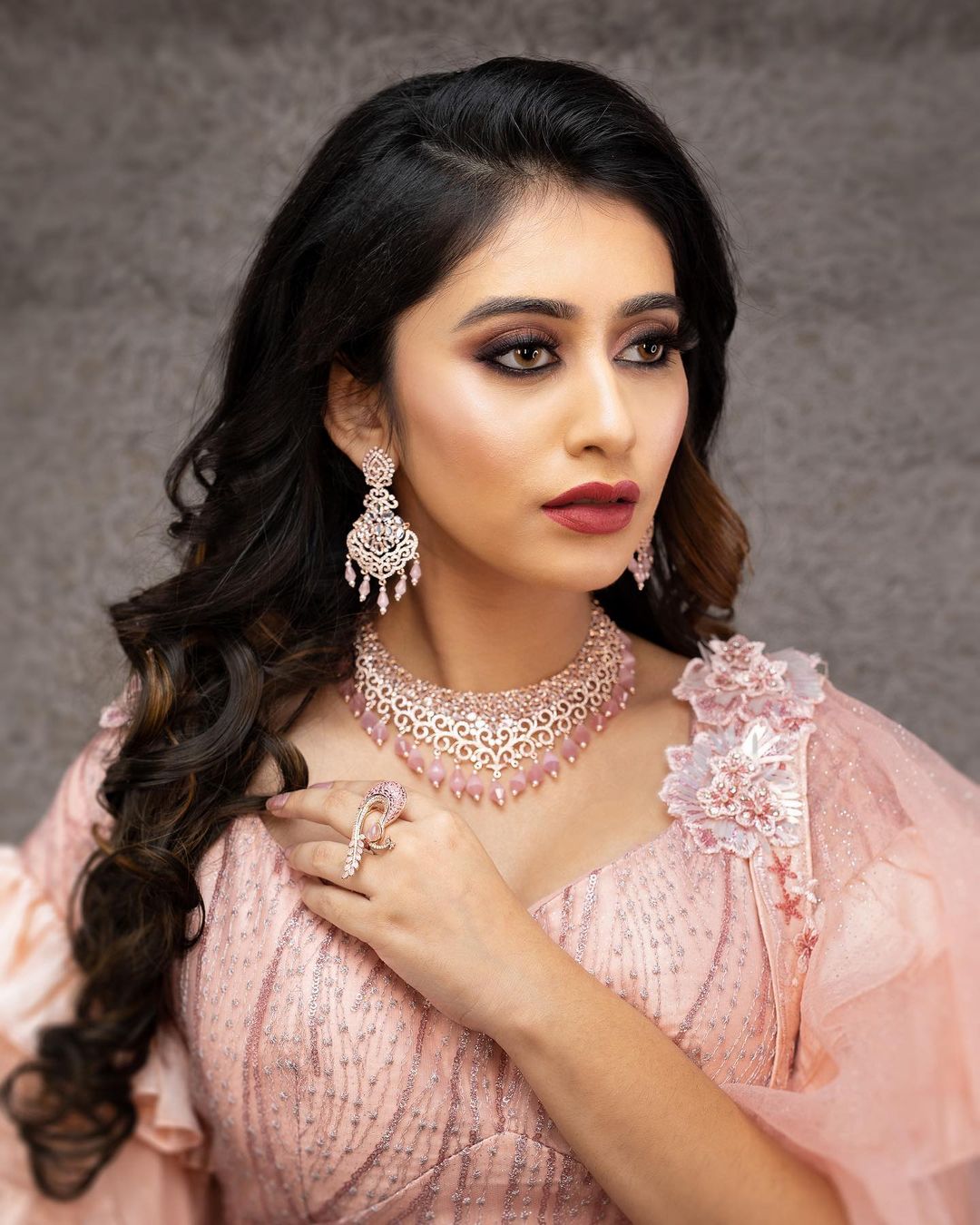
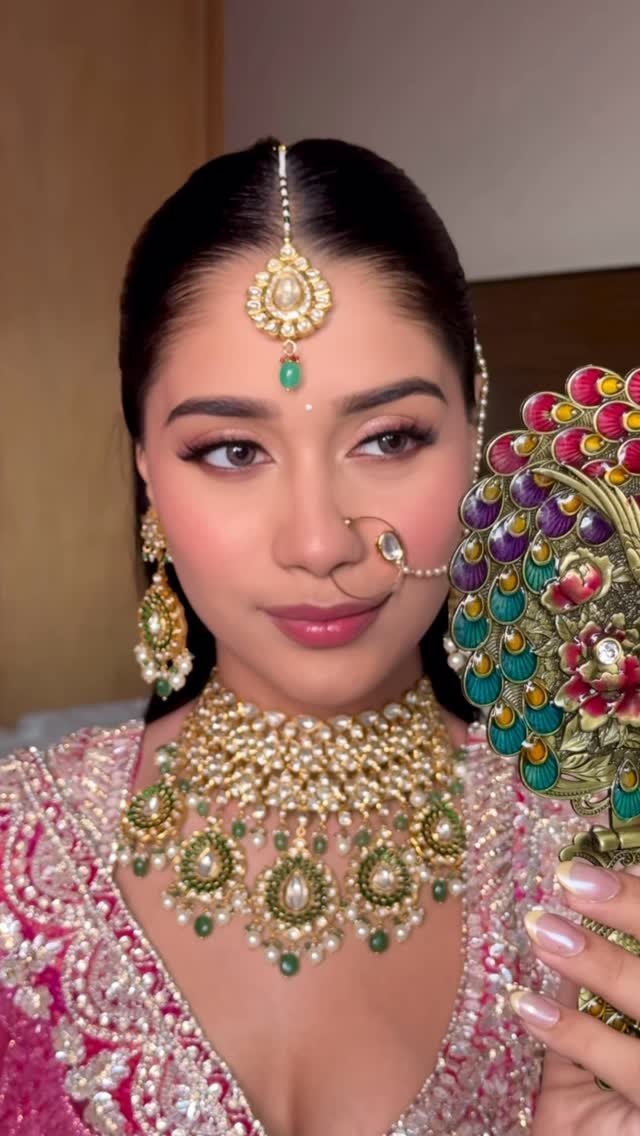
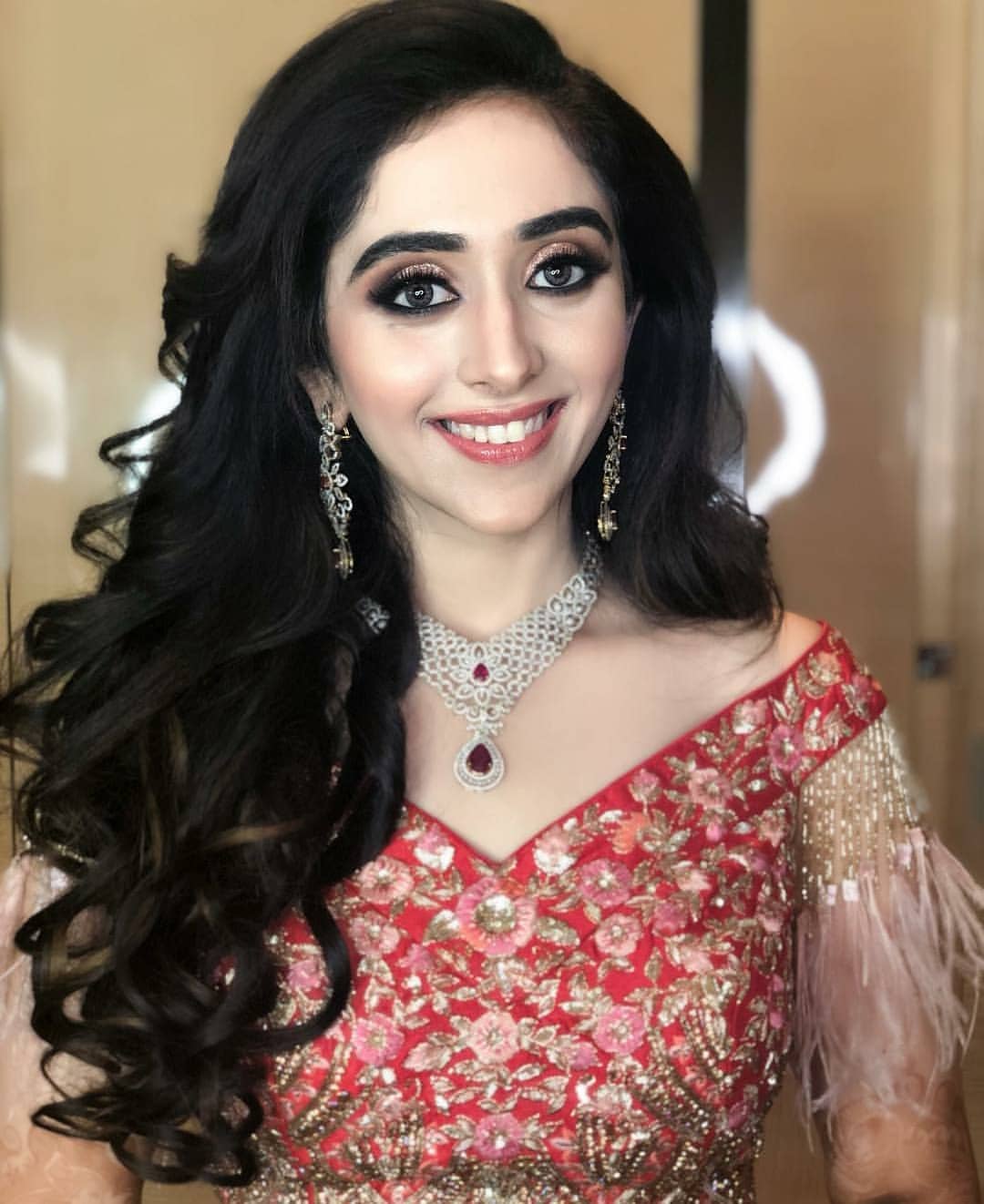
Real brides
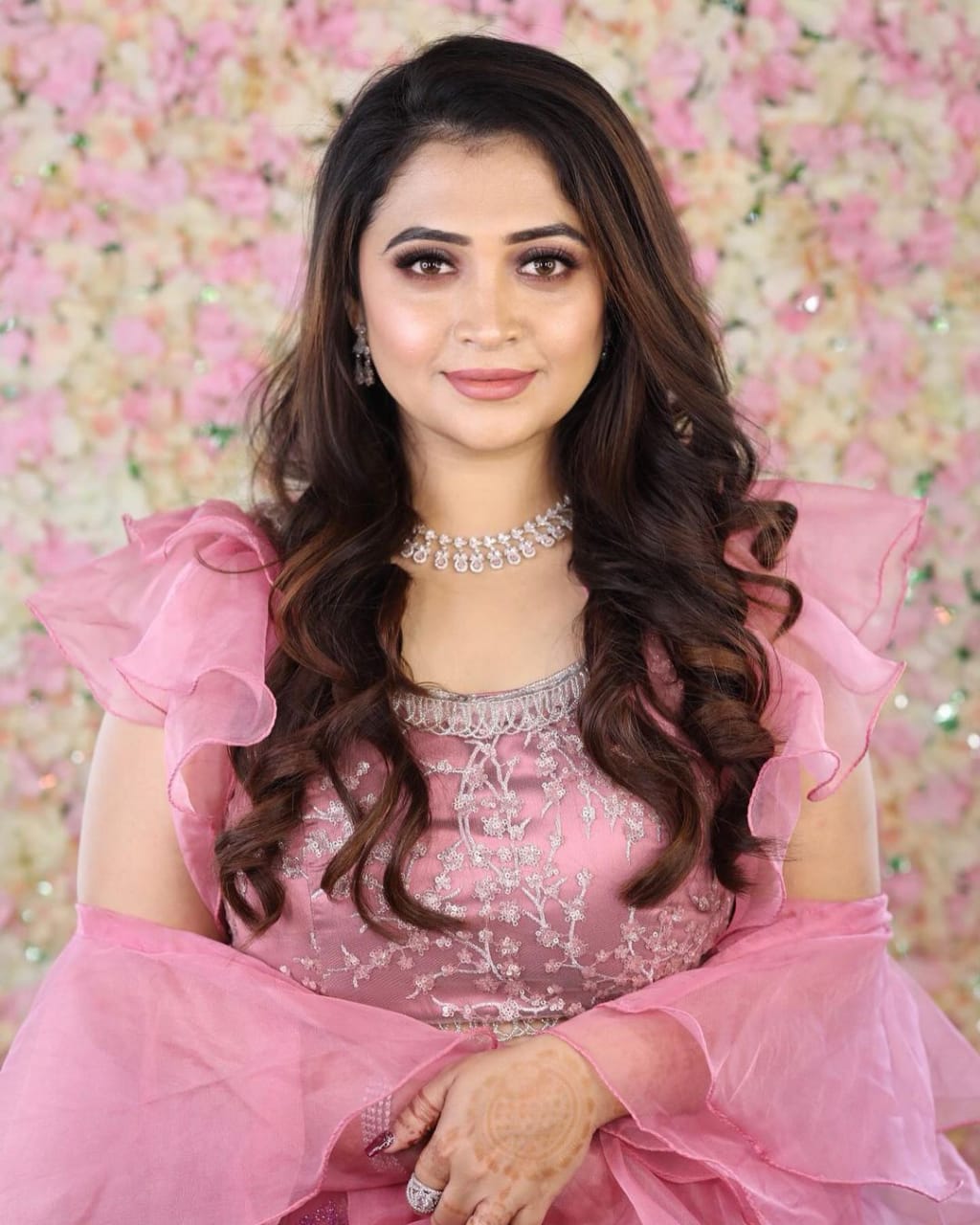
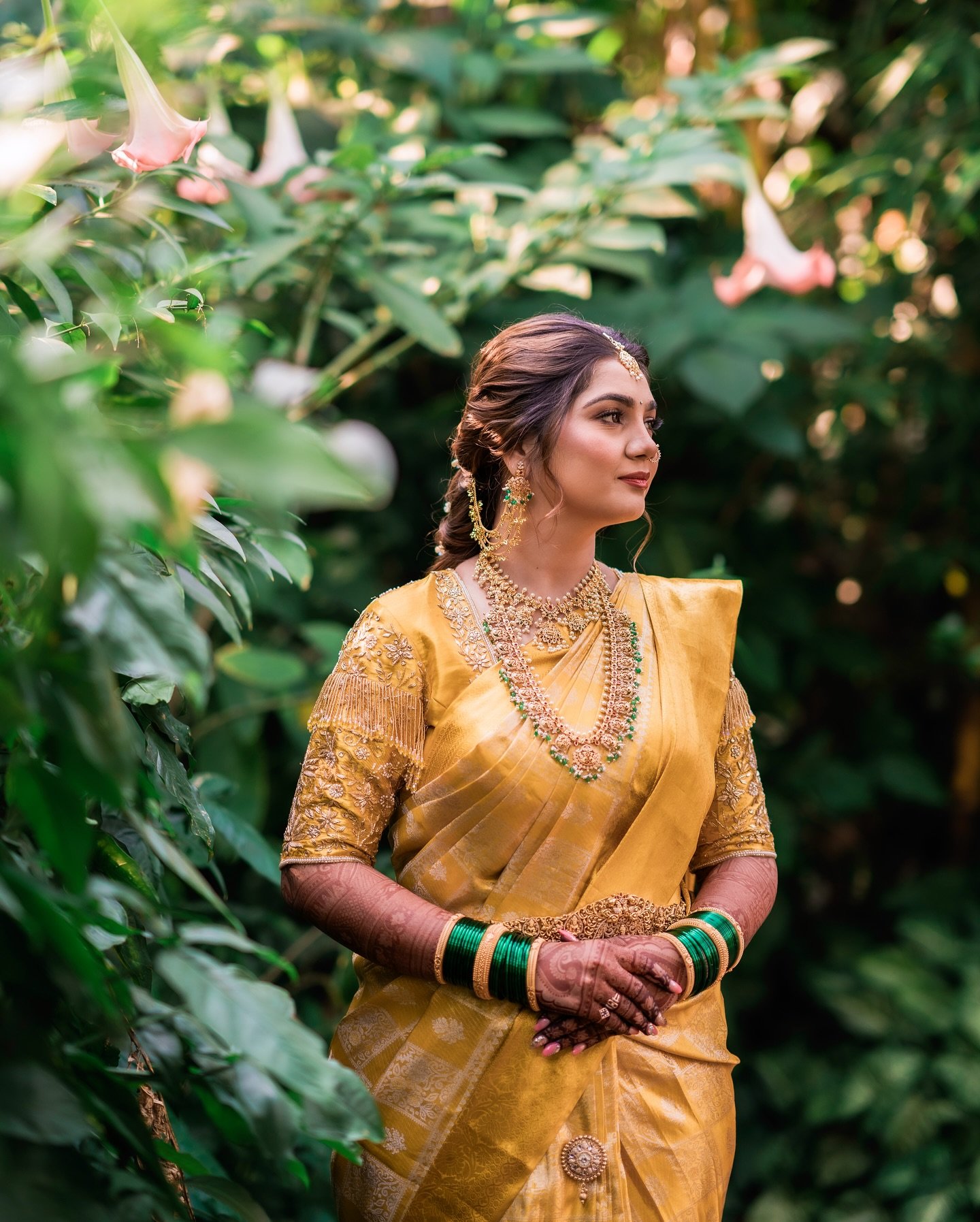
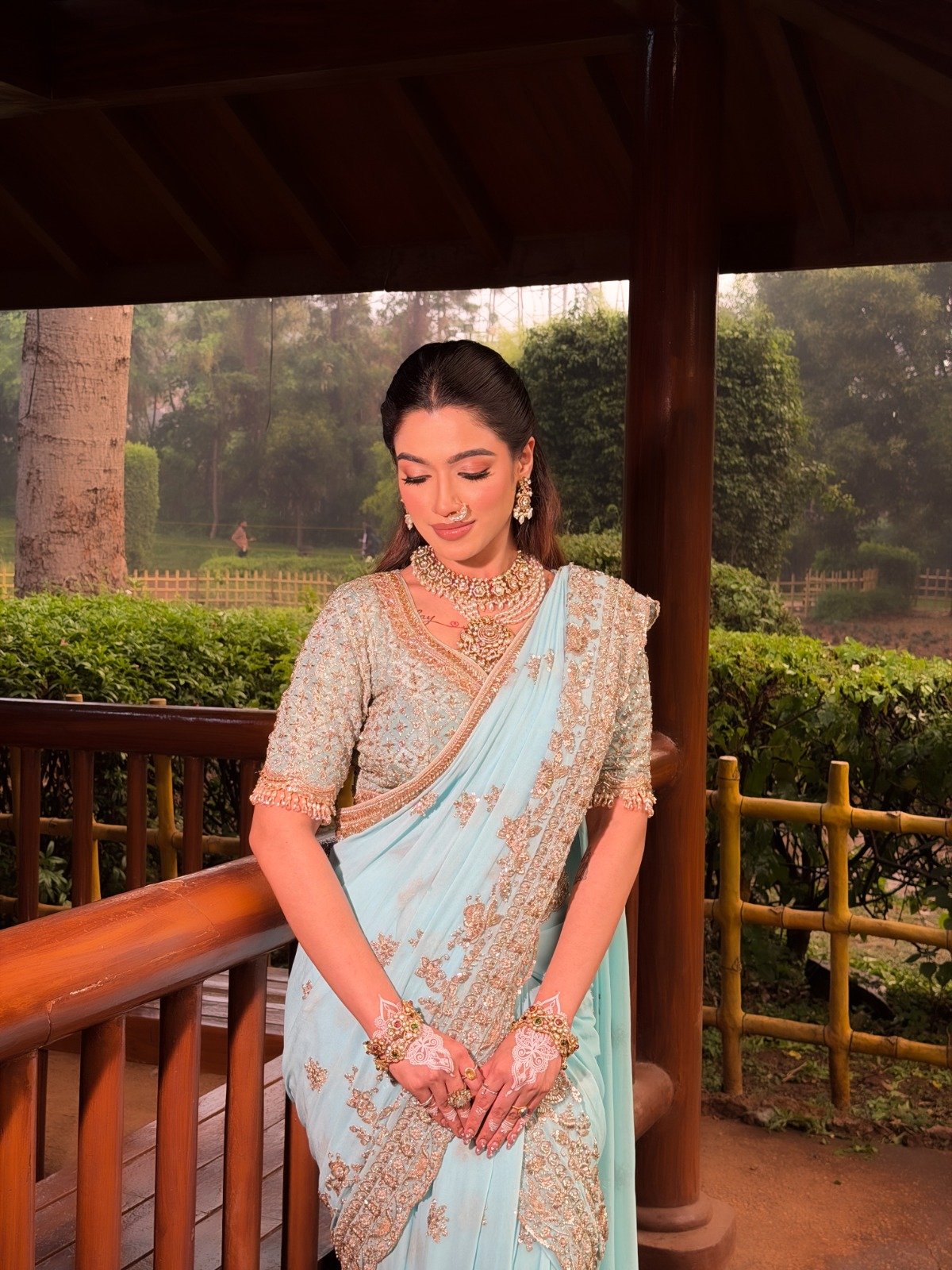
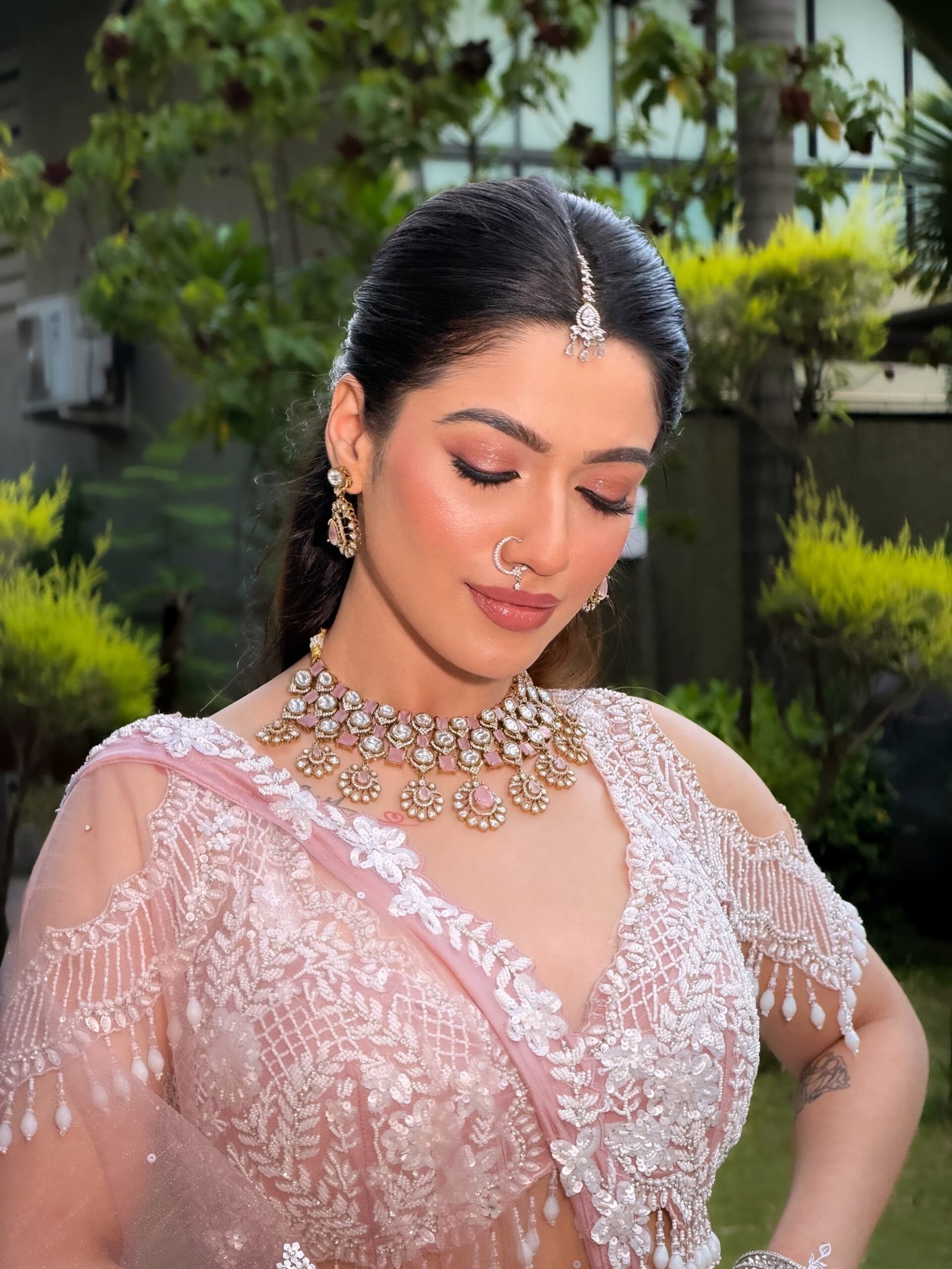
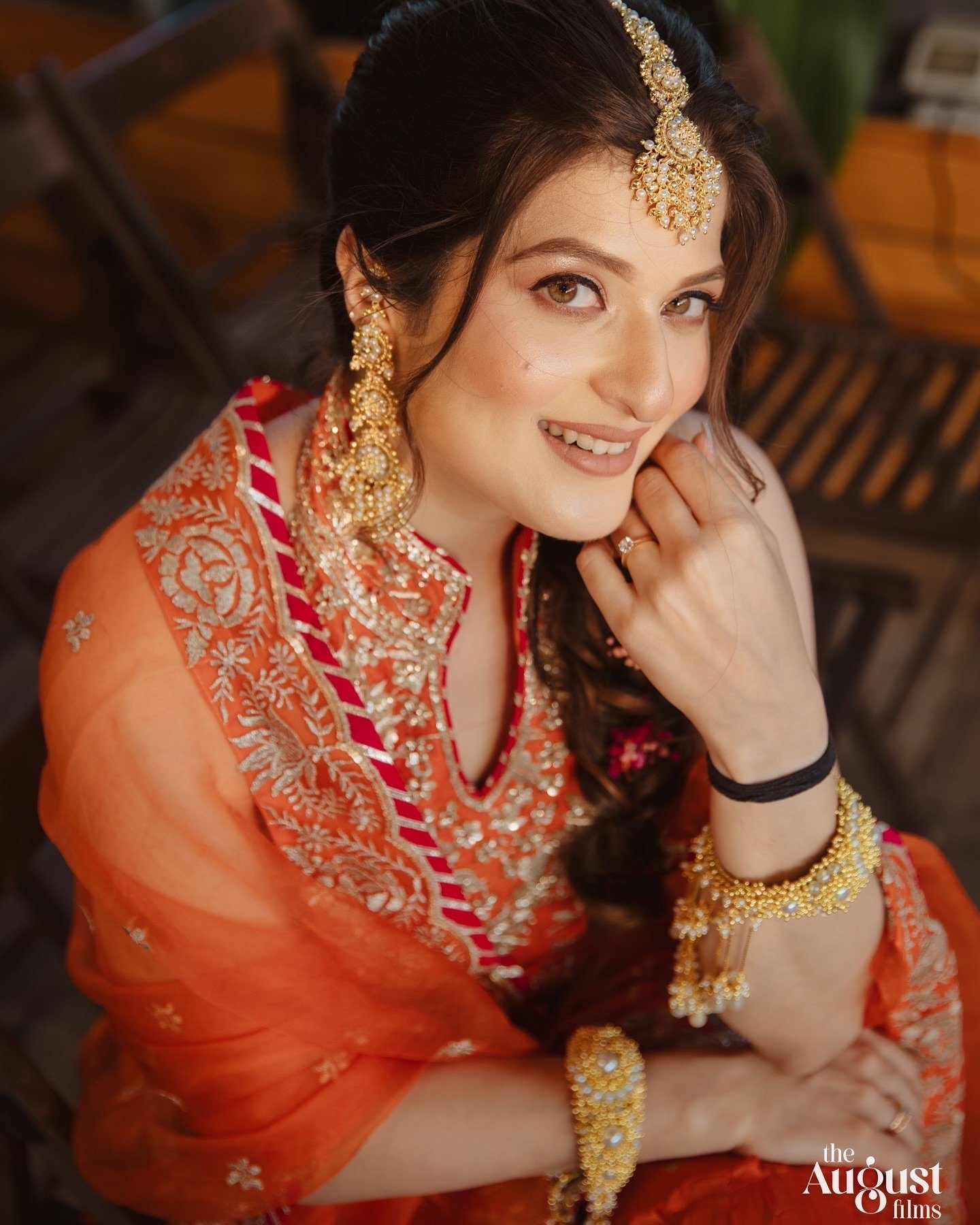
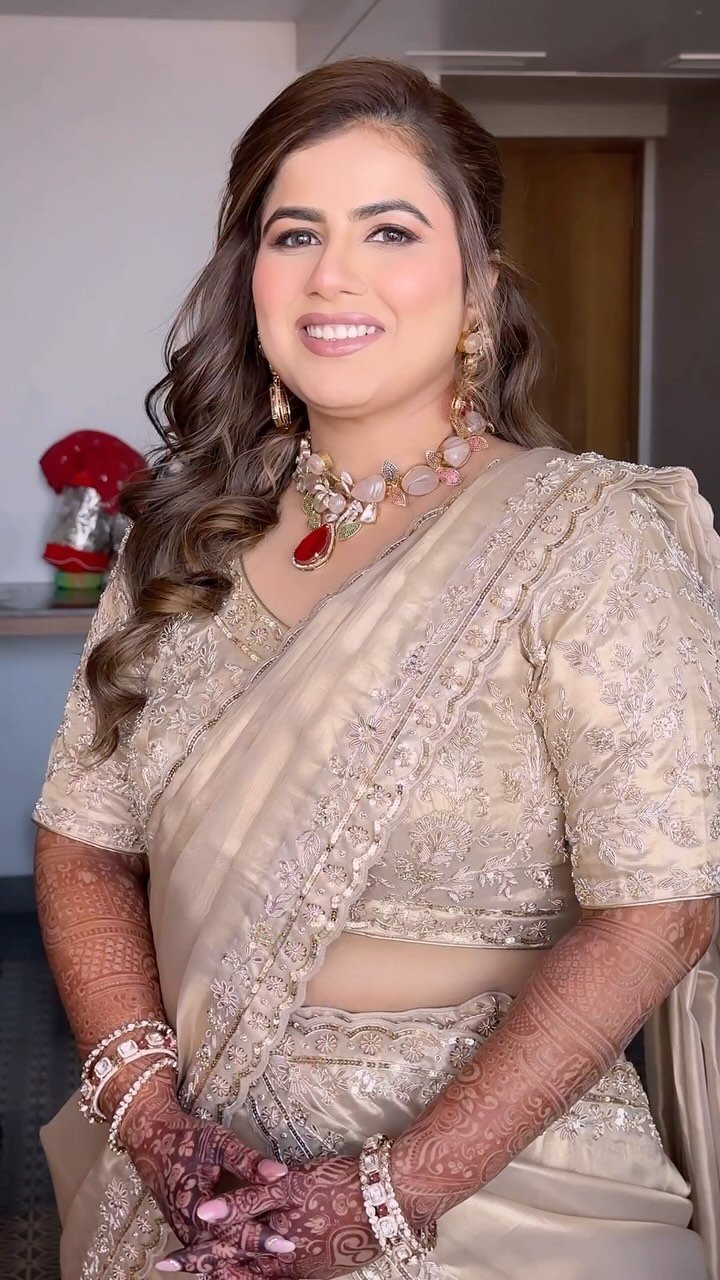
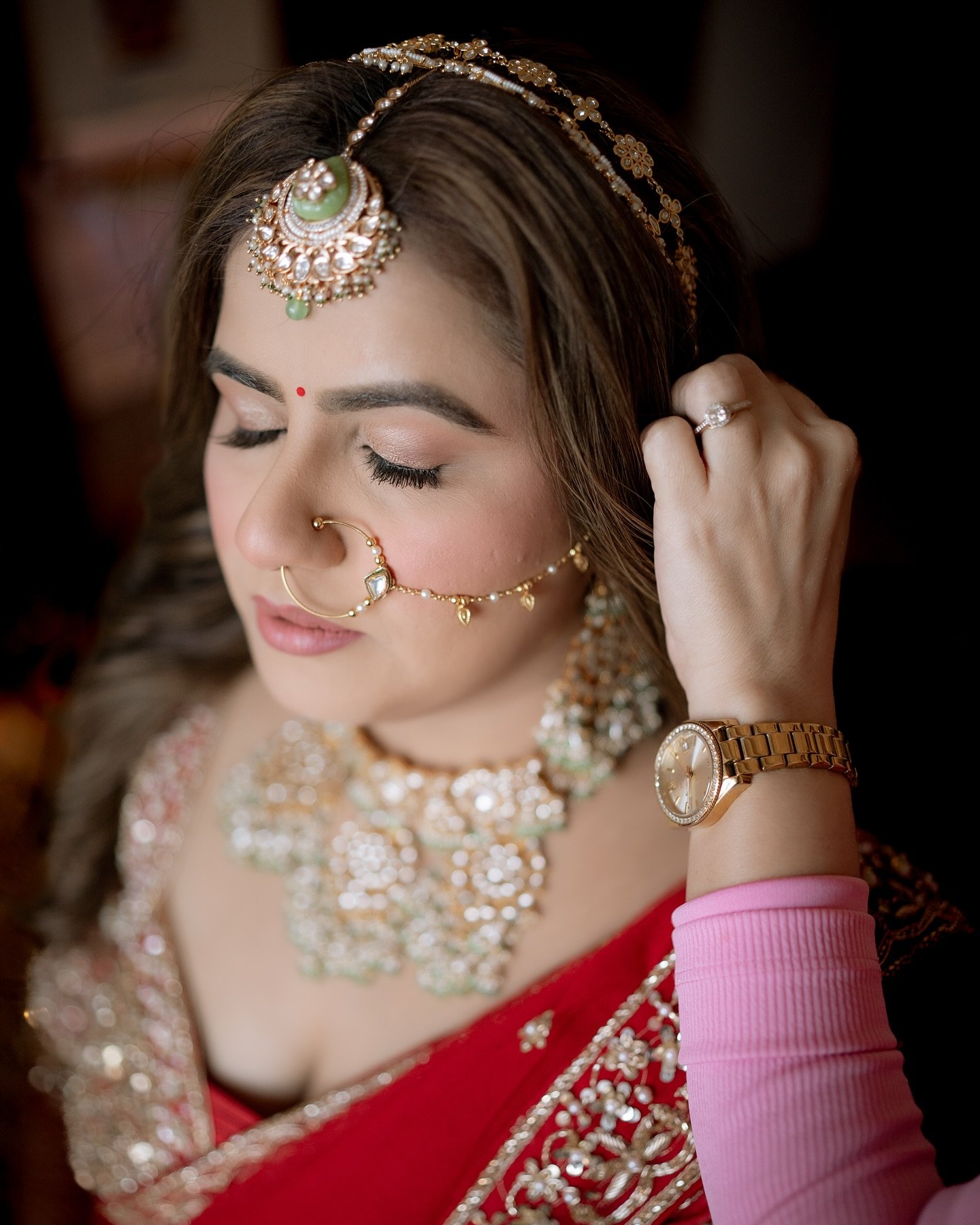
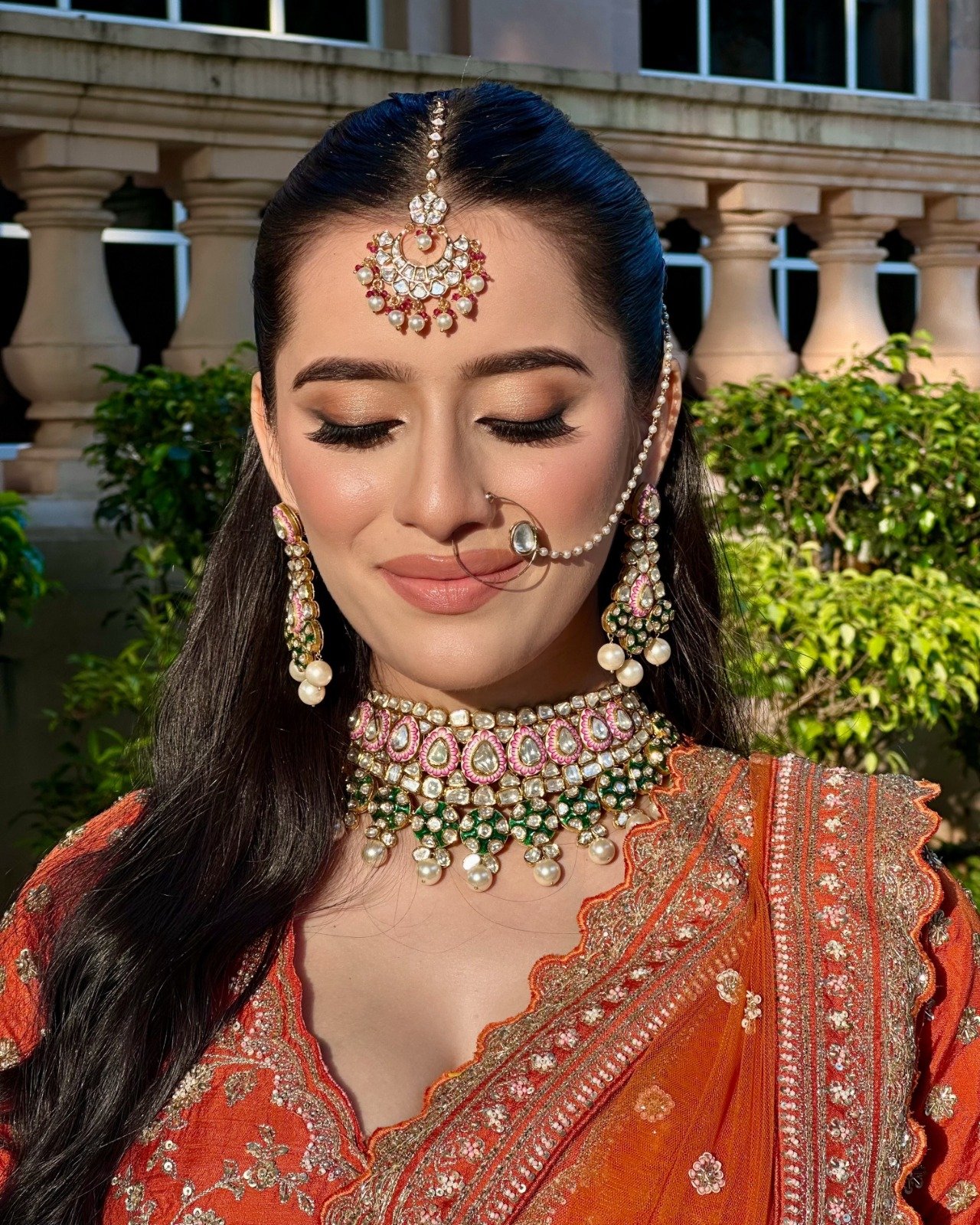
What goes wrong at a two-city Yorkshire wedding is not any individual look. It is that Friday’s bride and Sunday’s bride do not appear related. Look below for whether the same face is recognisably present across very different builds.
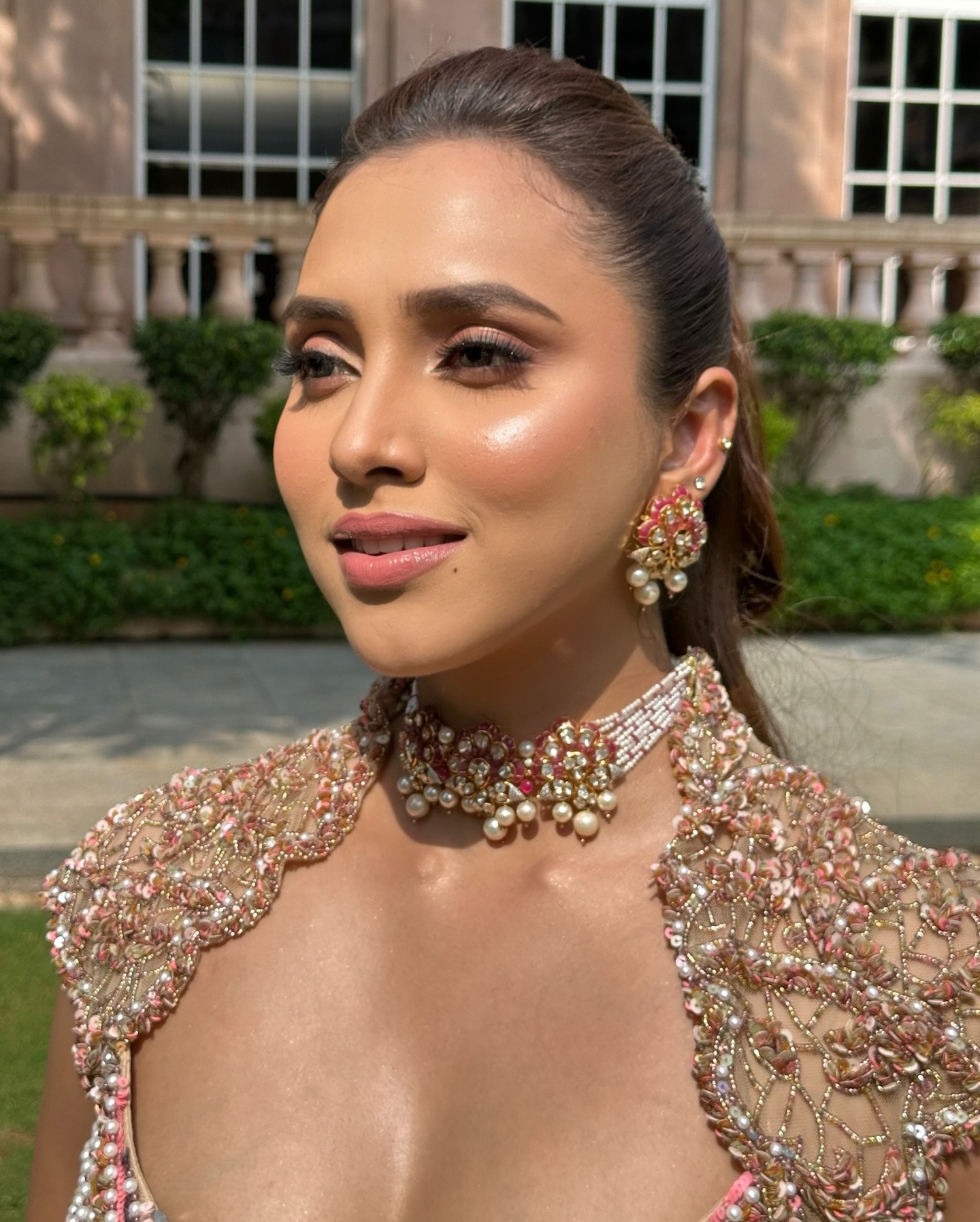
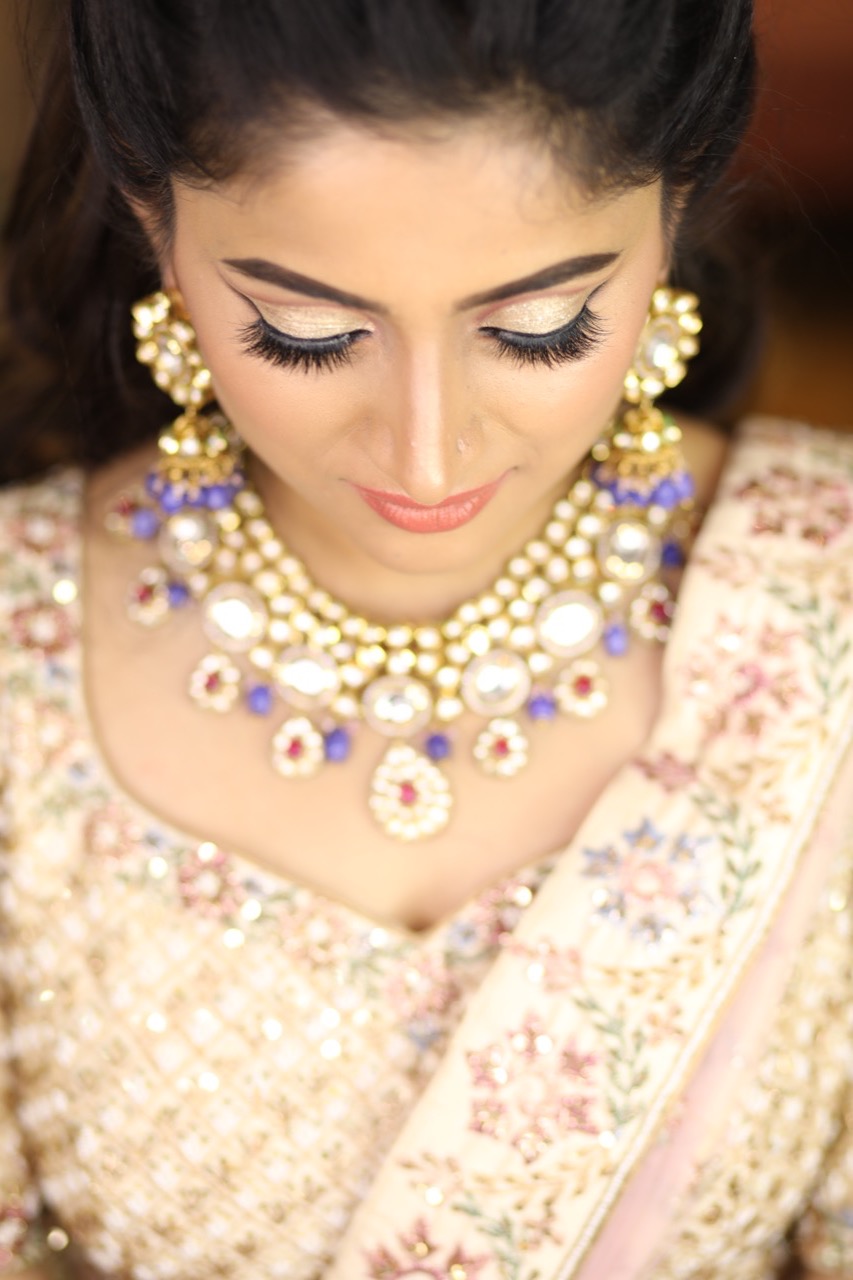
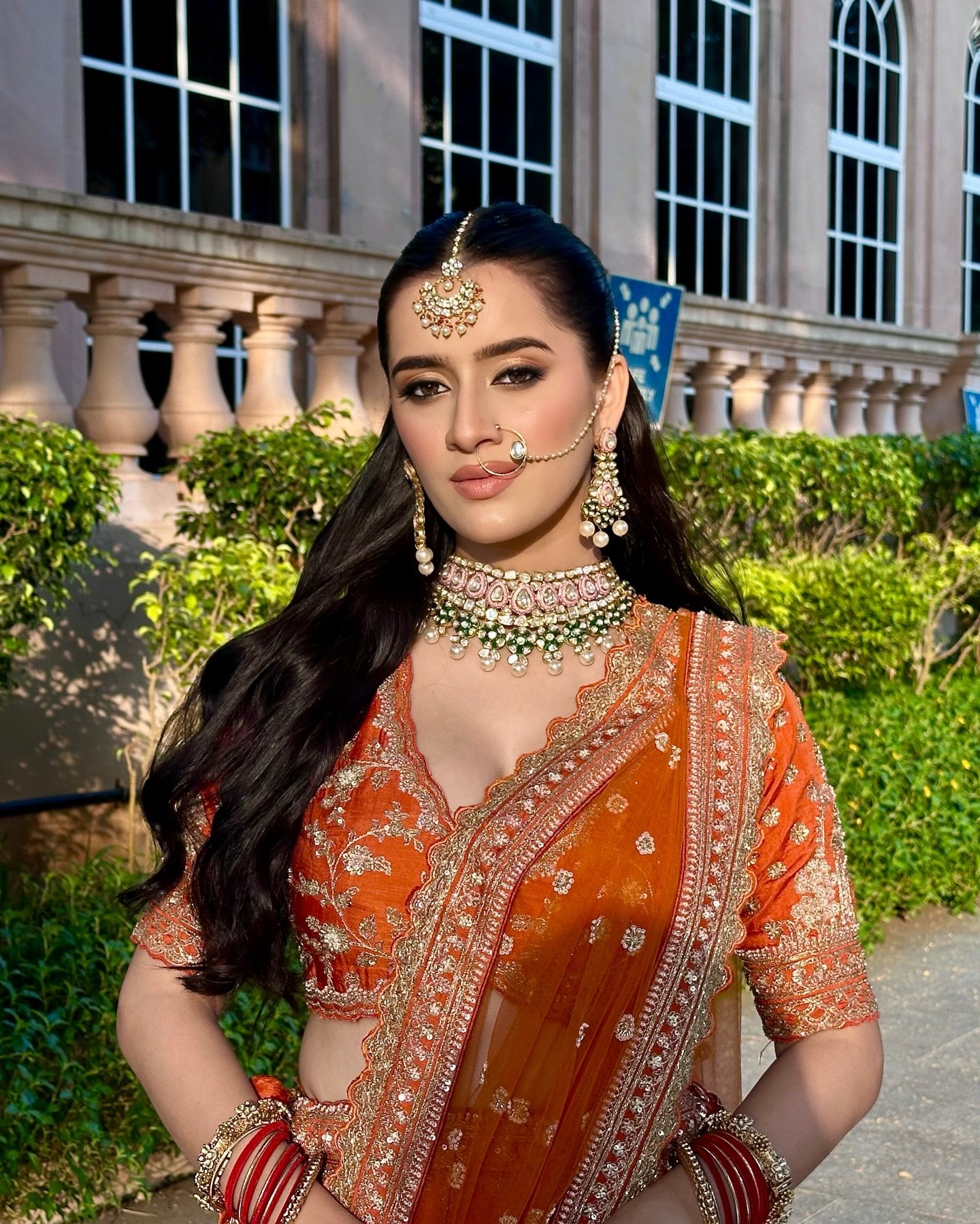
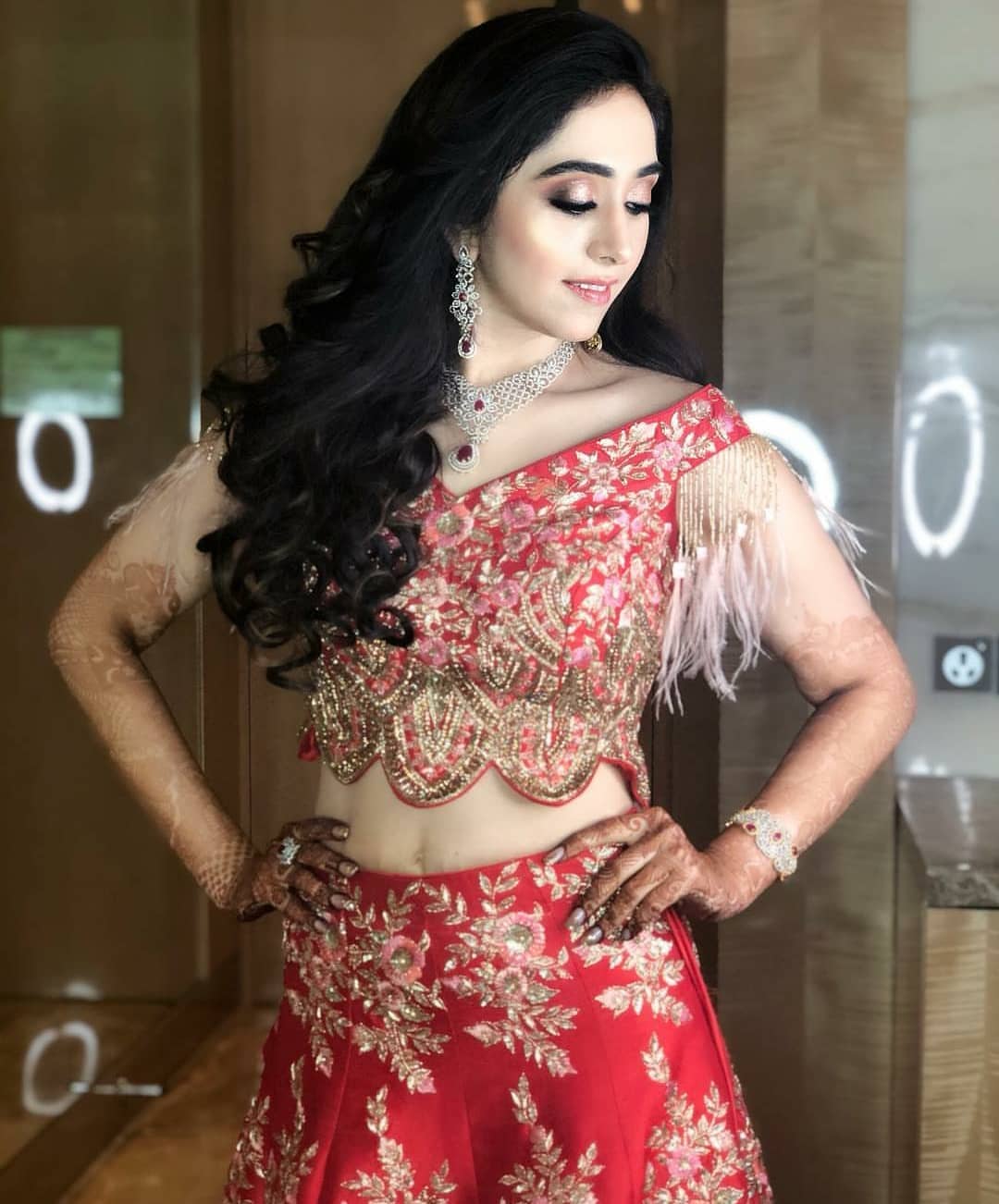

Yorkshire traditions
West Yorkshire holds substantial Punjabi, Sikh, Pakistani, Gujarati and Bengali communities across Leeds, Bradford and the surrounding towns, with families very often split between the two cities. Five with photographed portfolios below.

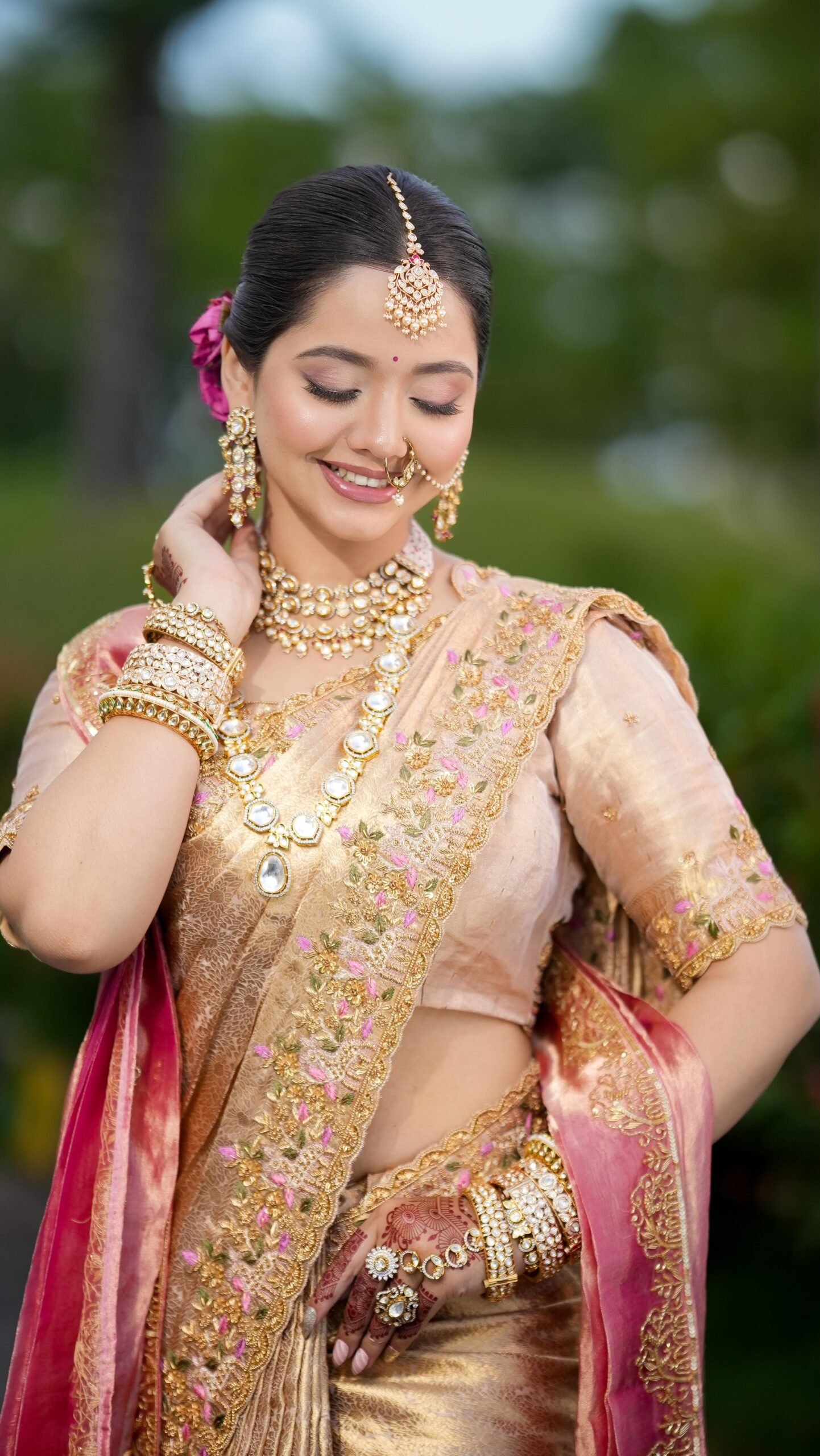
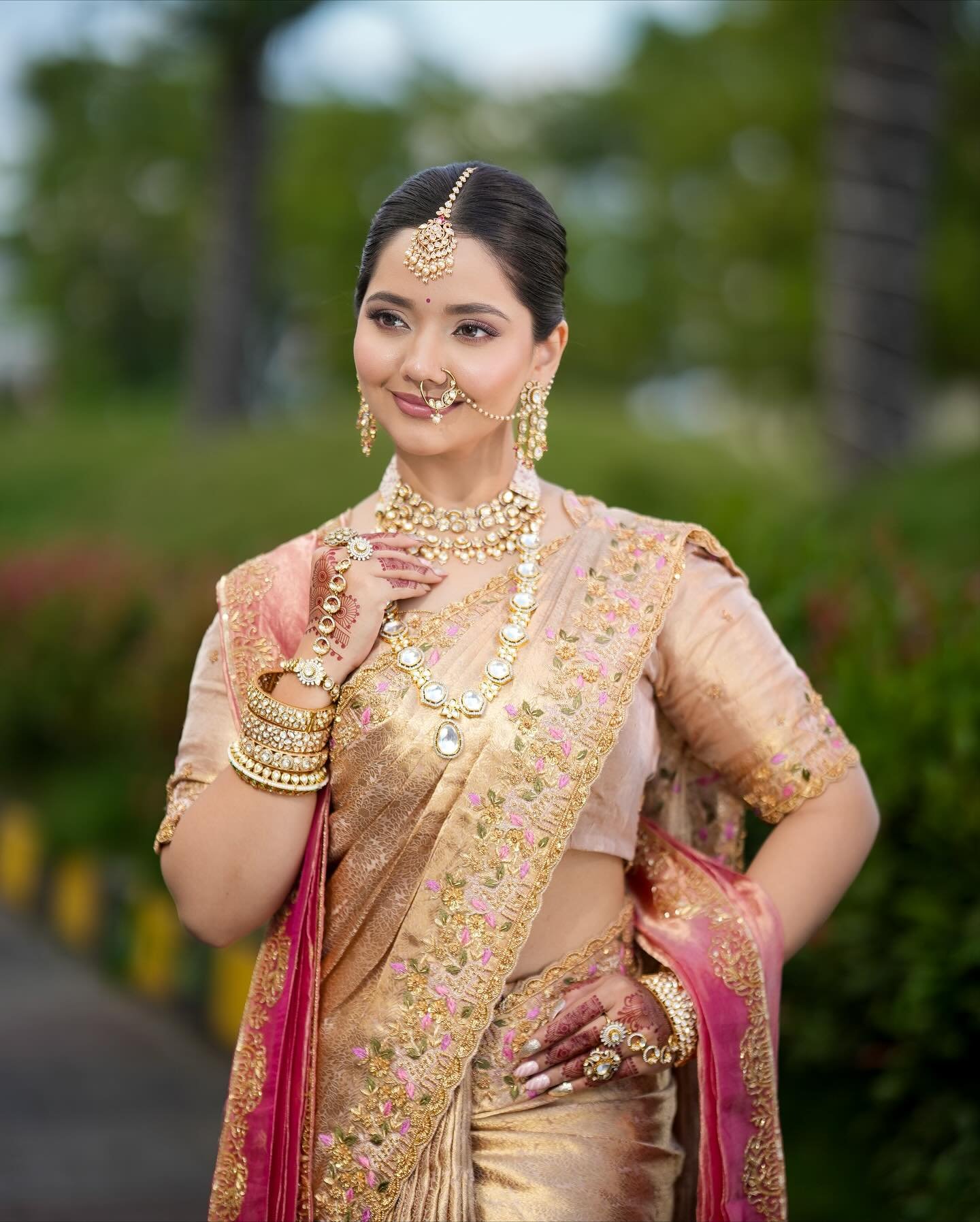


Four more are regular across West Yorkshire. Muslim bridal work has its own portfolio page; Gujarati, Bengali and Sindhi work is described rather than illustrated, because no photographed set is published for it here yet.
On video
A Yorkshire mehndi runs later and bigger than the schedule ever admits, so the useful thing here is seeing how a look is set rather than just how it finishes.
The register most Yorkshire brides ask for at the mehndi — noticeable, but still their own face underneath.
Red, gold and kundan under hall lighting, which is what most Leeds and Bradford receptions are lit with.
Yorkshire bridal parties are large. This is the standard the group gets held to, not just the bride.
The full sitting, uncut — the number you plan a compressed weekend around.
Travel & logistics
Everything here is designed around the fact that your functions are not in one place.
Tejaswini travels to England for one wedding at a time, with your dates blocked out end to end including the days either side. For a Yorkshire wedding she normally flies into Manchester or Leeds Bradford and stays between the two cities rather than in one of them, so neither morning involves a long cross-county drive before a pre-dawn start.
Arrival is two to three clear days ahead of the first function rather than the night before. That buffer covers flight disruption, recovery from a long-haul overnight, and time on the ground for a physical trial in Leeds or Bradford if you want one. Flight details go to you in writing once booked.
The kit travels as hand luggage wherever airline rules allow, with duplicates of the critical products split across bags. Because the weekend moves between venues, the kit is packed as a core case plus a compact travel set that goes in the car, so a touch-up or a second look never depends on getting back to the original getting-ready address.
A two-city weekend is planned and quoted as one wedding, not three bookings that happen to share a bride. Before travel, every function is mapped against the ones either side of it, with the specific Yorkshire problem accounted for: the mehndi almost always overruns, which compresses the next morning. The wedding-day start time is therefore set assuming it runs long, because it usually does. That is a scheduling decision made at quote stage rather than a panic on the day.
Each day runs to a written schedule agreed with you beforehand — start time, order of people, how long the bride takes, when the drape and jewellery go on, and the honest transfer time between the two cities. Bridal-party numbers are settled at quote stage, which matters more across a compressed weekend than anywhere else, because there is no slack to absorb an extra four people on the morning.
Where these weddings happen
Leeds carries most of the large-capacity venues, Bradford carries a lot of the family and community functions, and the spa and country hotels north towards Harrogate pick up the more contained celebrations. Worth scoping all three bands at once.
These are well-known venues in the area, listed to help you scope the search. They are not partners or affiliates, and none of them has been personally vetted — always confirm getting-ready rooms, timings and supplier rules directly with the venue.
The weekend
Yorkshire weeks are compressed into a weekend more often than they are spread across five days, which makes the mehndi bigger and the turnarounds tighter.

Yorkshire specifics
Leeds and Bradford behave as one wedding market and two logistical ones, which is where most of the scheduling friction comes from.
Booking it
Everything is planned as a single wedding from the start rather than as separate bookings that happen to share a bride.
Send your dates, which city each function is in, and how many people beyond the bride need hair and makeup. Flag the two-city split up front.
Artist fee per function, travel between cities accounted for, flights and accommodation on their own separate line.
Every function planned against the ones either side of it, so the mehndi, the ceremony and the reception are deliberately related.
With flight details shared. A physical trial in Leeds or Bradford is possible once she has landed.
The same hands and kit all weekend, which is the entire point of booking it this way.
Fair questions
Put plainly, because these are reasonable concerns rather than objections to be argued away.
Yorkshire questions
Ten, answered properly. WhatsApp usually replies the same day allowing for the time difference.
No — it is the normal Yorkshire pattern. Say so at enquiry and it is planned and quoted as one wedding with the travel between the two cities built in, so you get the same artist and kit across every function.
No. One wedding, one quote, with the inter-city travel accounted for inside it rather than charged as though they were unrelated jobs.
Yes. Sheer, well-prepped bases with clean definition rather than full coverage. It is also what survives a compressed weekend better, because a lighter base breaks down far less visibly over three consecutive long days.
Yes, treated exactly the same way — one booking, one schedule, with transfers accounted for.
Yes, routinely. The sitting is scheduled backwards from the ceremony time, and if the getting-ready location is in the other city that travel is counted in rather than assumed away.
Yes, styled as two clearly different looks rather than one touched up. Coverage and finish are planned around a hijab or dupatta where that is part of the look.
Quoted individually in pounds, depending on the functions, how many people beyond the bride need hair and makeup, and the travel dates. Send your dates and both cities for an itemised written quote.
Yes, plus lehenga, saree and dupatta draping. Keeping the hairline, the jewellery placement and the drape with one person is what stops a look drifting across a weekend.
Yes, but tell us the realistic maximum at enquiry rather than the confirmed count. Across a compressed weekend it determines the start times and whether a second artist is booked.
As early as possible, because travel is planned around your dates and Yorkshire weekend dates tend to get fixed well in advance.
Live from the studio
Live from @tejaswini_makeupartist. Worth scrolling if you want to see the most recent brides rather than the most photogenic ones from three years ago.

Continue exploring
If the weekend spreads further than Leeds and Bradford, it is still quoted as one wedding.
Over the Pennines, where the split is usually ceremony and reception rather than two cities.
The Midlands equivalent at larger guest counts.
A couple of hours south, with the same travel-for-vendors habit.
The travel model, and all eight cities in one place.
Every photographed tradition, grouped, with reels.
If the celebration is back home — Udaipur, Jaipur and beyond.
Yorkshire bookings
Send your dates, which city each function is in, which ones you need covered and how many people beyond the bride need hair and makeup. Flagging the two-city split at enquiry is the single most useful thing you can do — it changes the schedule and the quote. Handled over WhatsApp or email.